A modified car is only a safe buy when every change is legal, declared to the insurer, notified to DVLA where the rules require it, and backed by receipts.
Get all four and a well-modified car can be a lot of machine for the money. Miss one and you inherit somebody else's insurance risk, MOT failures and resale problem.
Is buying a modified car a bad idea?
Not automatically. The best modified cars are built to a plan with quality parts, professionally fitted, and they can cost far less than building the same car yourself. The worst are cheap parts bodged on to look fast. The difference is rarely visible from the kerb; it lives in the paperwork, so judge the evidence rather than the badges.
Which car modifications are illegal in the UK?
The common trouble spots have hard legal lines, and several are checked at the MOT:
| Modification | The rule | Who must be told |
|---|---|---|
| Window tint | Windscreen must let in at least 75% of light, front side windows 70% (GOV.UK tint rules) | Nobody, but excess tint can mean a prohibition notice |
| Number plates | Characters can't be rearranged or restyled; illegal display risks a £1,000 fine and an MOT fail (GOV.UK plate rules) | Nobody; the plate itself must simply comply |
| Engine swap, colour or fuel change | The V5C must be updated (GOV.UK V5C changes) | DVLA, by the keeper |
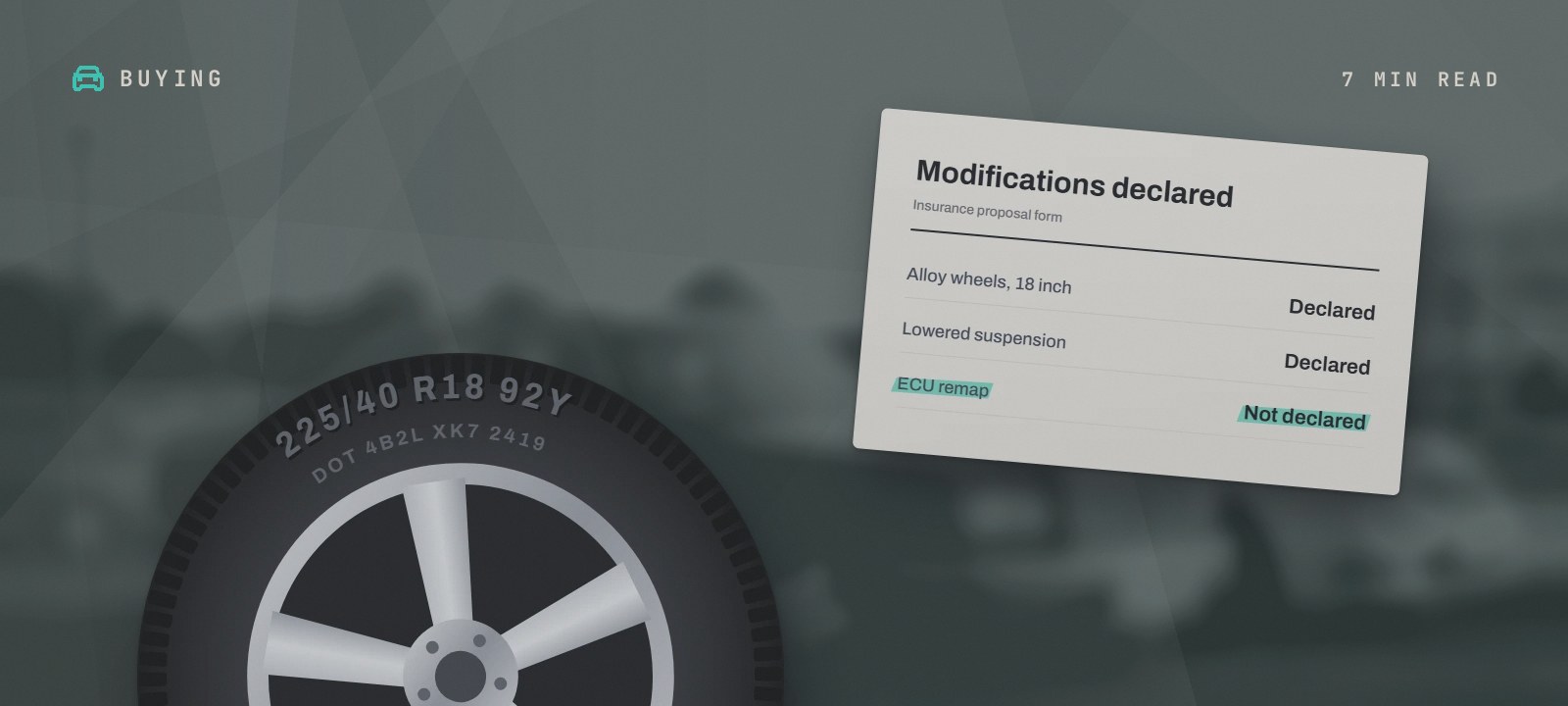
| Anything affecting performance, looks or value | Must be declared or cover can be refused or voided | The insurer, every time |
Do modifications have to be declared to insurance?
Yes, effectively all of them. Insurers ask about anything that changes the car from standard, and an undeclared modification discovered at claim time can void the policy.
Before you buy, get a quote on the exact car with its exact modifications listed; for some cars the premium alone kills the deal, and it's cheaper to learn that before the money moves.
What should the V5C say about a modified car?
Engine swaps, colour changes and fuel-type conversions must be reported to DVLA and shown on the V5C logbook. A car whose engine or colour visibly disagrees with its paperwork is a discrepancy to resolve before buying, not after.
At the extreme, a car rebuilt with too many changed parts can even lose its original identity under DVLA's radically altered vehicle rules. If the seller shrugs at the mismatch, walk.
What paperwork should a modified car have?
- Receipts for the parts and the fitting. A genuine enthusiast keeps them; no paperwork usually means no idea what was done.
- The original parts, ideally in the boot. Reversible modifications protect the car's value and your options.
- A coherent story. Suspension, brakes and power upgraded together suggests a plan; one loud exhaust suggests a phase.
What should you inspect before buying?
- Engine and remaps: ask what was done and by whom; look for clean starts, no warning lights, no smoke.
- Suspension and brakes: lowered cars can crash over bumps; check for uneven tyre wear and knocks on the test drive.
- Wheels and tyres: oversized wheels can foul the arches; look for kerbing, cracks and mismatched brands.
- Electrics: aftermarket stereos and lighting are where bodged wiring hides, and wiring gremlins outlive owners.
- MOT record: the free MOT history shows advisories that hint at how the car has really been treated.
How do modifications affect resale value?
Usually downwards, and always more slowly. Modifications reflect one owner's taste and shrink the pool of future buyers, so a heavily modified car tends to sell for less than the same car standard, and takes longer doing it. Buy at a price that reflects that, and keep every original part that comes with the car.
Finally, make sure the styling isn't the distraction: run a history check for the plate changes and keeper history hiding underneath, and take our used car checklist to the viewing like you would for any other car.