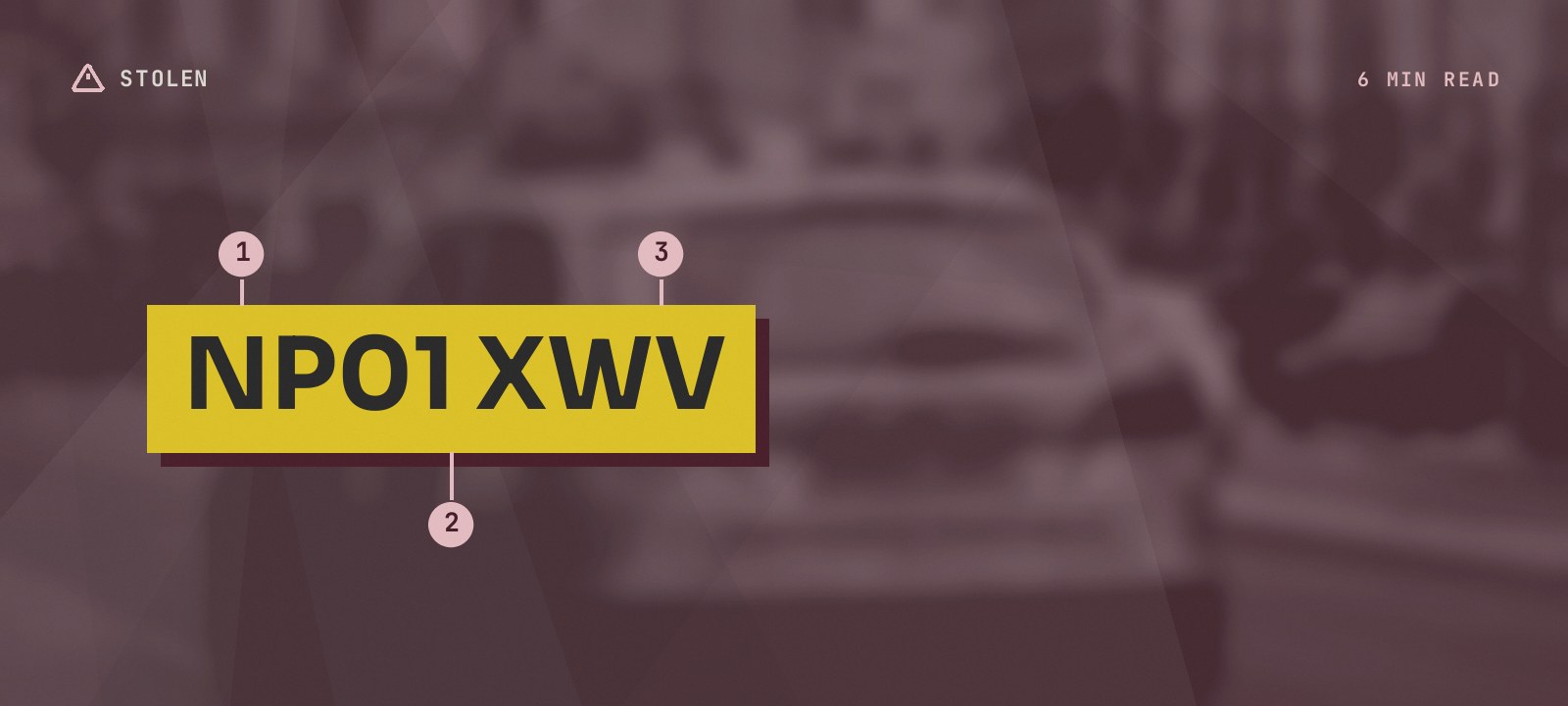
Around 130,000 vehicles are stolen in a bad year on Home Office and ONS crime figures, and a healthy share of them don't get stripped for parts; they get sold, to ordinary buyers, with paperwork that looks fine in the kitchen light. The law on what happens next is brutally simple: a thief can't pass on ownership, so the car goes back to whoever legally owns it, and the person who bought it in good faith loses both the car and the money.
Why you can't just "look it up"
The uncomfortable starting point: there is no free public register of stolen vehicles. That record lives on the Police National Computer, and the public can't search it. Paid history checks include a stolen marker sourced through insurer and police data-sharing agreements: our £14.99full history check carries one, alongside the insurance theft register, while the £5.00 report covers the recorded identity, MOT and mileage history and status flags only. Worth being honest about what that marker is, though: a record shared between insurers and the police, not a live PNC search. No single database, ours or anyone's, replaces the checks below, because the most dangerous stolen car is one whose record is clean: a cloned car wearing another vehicle's identity.
Cloning: the scam the paperwork can't catch
Cloning works like this: a thief steals, say, a grey BMW 320d, then finds a legitimate grey 320d of the same year living somewhere on the other side of the country. They put that car's plates on the stolen one, forge or doctor the documents to match, and advertise it. Run the reg through any checker and everything comes back rosy, because you're reading the donor car's history, not the one parked in front of you.
The defence is joining the physical car to the paperwork:
- Find the VIN on the car (base of the windscreen, driver's door pillar, stamped on the chassis) and check every location shows the same number. Tampered rivets, fresh paint around the plate or a windscreen VIN that looks newer than the glass are all reasons to leave.
- Match the VIN to the V5C. Character by character, not a glance. A cloned car often carries the donor's plates but its own original VIN, because re-stamping a chassis is hard.
- Match the record to the metal. Colour, fuel, engine size, number of doors: if the history says blue diesel and you're looking at a blue petrol, the plates are lying. Cross-check the MOT history too: does the mileage trend fit the condition of the driver's seat and pedals?
The seller checks matter as much as the car checks
Stolen cars are sold by people who control the meeting, because the meeting is the weak point. So take it back:
- View at the address on the V5C. This is the single strongest filter there is. "I'll bring it to you" and "meet me at the services, it's easier" are how cloned cars get sold. A genuine seller at their own home, with the car on their own driveway, has nothing to arrange.
- Check the name matches. Ask for ID if serious money is changing hands; a genuine private seller won't be offended. "Selling it for my brother" means you're not talking to the keeper, and you should be.
- Both keys, service history, old MOTs. Thieves rarely have the full domestic clutter of real ownership. One key and no history isn't proof of anything, but it's another weight on the scale.
- Price sanity. Fifteen to twenty percent under market with a story attached (divorce, emigration, "need it gone this weekend") is the standard pressure package. The discount exists to make you skip the checks. That's its entire job.
Payment is your last line of defence
Pay by bank transfer at the seller's home once you're satisfied: the transaction then names a real account held by a real person, which matters if things go wrong. Never pay cash in a car park, never pay a "holding deposit" for a car you haven't seen, and treat any request for payment to a name that doesn't match the seller's as the end of the conversation.
If you suspect a car is stolen
Don't buy it, obviously, but also don't stage a confrontation on the doorstep of someone who steals cars for a living. Make an excuse, leave, and report what you saw to the police on 101 (or Crimestoppers anonymously) with the reg, the VIN if you got it, and the address. If you've already bought a car and the police later seize it as stolen, get a crime reference, tell your insurer, and take legal advice about recovering the money from the seller; your claim is against them, not the owner getting their car back.
Where a history check fits
Think of it as one layer of a three-layer defence: the history check confirms the registration's recorded identity, spec and MOT and mileage story so you know what the car in front of you should be; the physical VIN inspection proves the car actually is that car; and the seller checks prove the person selling it has the right to sell it. Skip any one of the three and the other two can be beaten. Run all three and you're a spectacularly unattractive target.