The rules that keep a private car sale safe fit on one hand: never release the car until the money has actually landed in your account, hand over only the green V5C/2 slip, and tell DVLA the moment the deal is done.
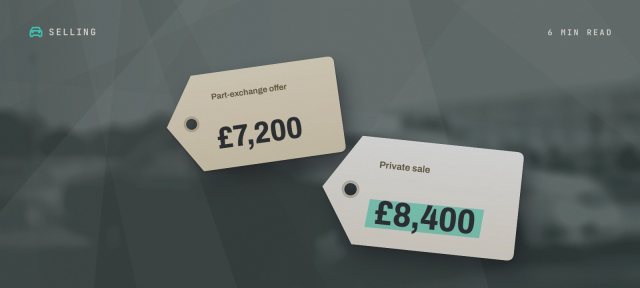
Selling privately usually beats a trade-in by hundreds of pounds; these rules are what that margin costs.
What documents do you need to sell your car?
The V5C logbook, the MOT certificate (or its online record), the service history and a receipt you write yourselves. Two details deserve special care. First, the buyer gets the green "new keeper" slip (V5C/2) on the day; you keep the rest of the V5C to notify DVLA.
Second, GOV.UK warns sellers never to share the V5C document reference number, especially not in an advert: fraudsters use it to order a duplicate logbook and clone or steal a car's identity.
How do you advertise without inviting trouble?
Photograph the car, not your paperwork; keep the reg visible but the documents out of shot. Fake "buyers" reveal themselves early: they're abroad, they'll send a courier, they propose an escrow service you've never heard of, or they make a strong offer on a car they've never seen.
Real buyers turn up, kick the tyres and pay in person. Anyone routing the sale through a third party of their choosing is the scam, not the exception.
Should you let a stranger test drive your car?
Only on three conditions, and all of them before the engine starts:
- See their driving licence and photograph it or note the details.
- Confirm they're insured to drive your car: their own policy's driving-other-cars cover or a temporary policy. Ask to see it, don't assume.
- Go with them, and keep hold of your keys until you're both in the car. A "solo test drive" with you on the pavement is how cars get stolen politely.
What's the safest way to take payment for a car?
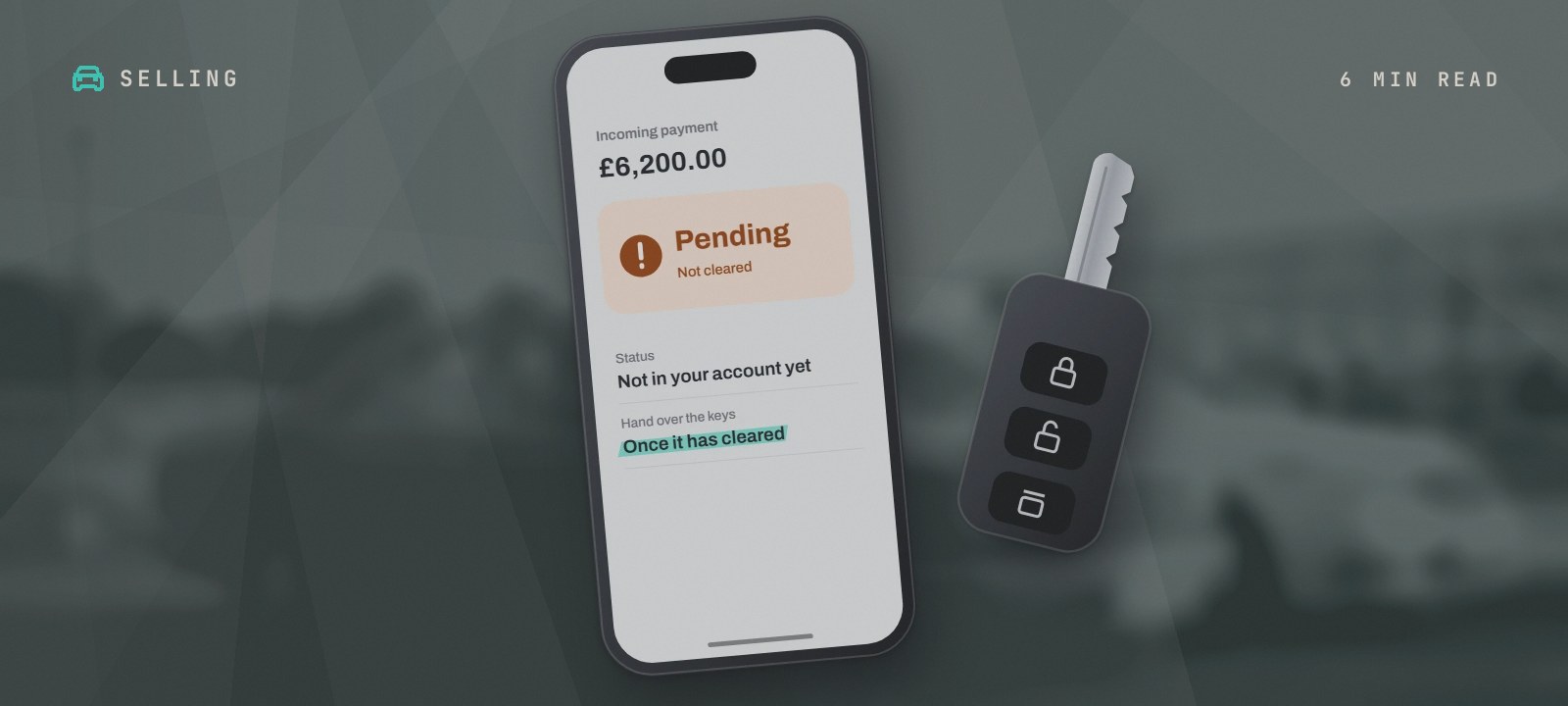
A bank transfer you have watched arrive in your own banking app. A Faster Payments transfer usually lands in minutes, even for thousands of pounds; wait for it, refresh, and only then hand over the keys. Everything else is where sellers get burned:
- Screenshots and "pending" notifications prove nothing; a payment-sent screen can be faked in seconds.
- Cheques and banker's drafts can bounce or be forged after the car is long gone.
- Overpayments are a classic: the buyer "accidentally" pays too much, asks for the difference back, then the original payment reverses. Never refund an overpayment; unwind the whole deal instead.
- Large cash sums carry forgery risk; if you accept cash, count it at a bank counter and pay it in on the spot.
What do you tell DVLA after selling?
Report the sale on GOV.UK's sold-my-vehicle service the same day, using the buyer's details. It takes minutes, your tax is cancelled and any full months left are refunded automatically, and the record stops pointing at you.
Until DVLA hears otherwise you remain the registered keeper, which is who the speeding fines and parking charges go looking for. Remember the buyer can't inherit your tax either; it doesn't transfer, so they must tax the car themselves before driving home.
What should you check off before handing over the keys?
- Payment confirmed in your own banking app, not theirs.
- Receipt signed by both of you: names, addresses, reg, mileage, price, date, "sold as seen".
- Green V5C/2 slip handed over; the rest of the V5C used to notify DVLA, then destroyed once the new logbook is confirmed.
- DVLA told online; keep the email confirmation.
- Your insurance on the car cancelled or transferred once it's gone.
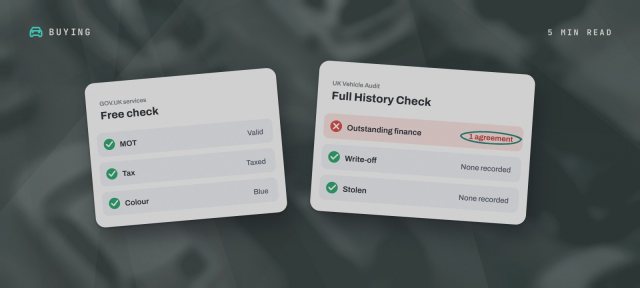
One last edge worth having: honesty sells. Buyers fear scams exactly as much as you do, so a car with its paperwork straight and an honest mileage sells itself. Point them at a sample history report or invite them to run their own £5 check; a buyer whose suspicion you've answered is a buyer who pays the asking price.