Electric cars pay road tax. The exemption ended on 1 April 2025, and since then an EV has been taxed like any other car of its age, which for most means the standard rate.
New electric cars pay a token first-year rate, and expensive ones pay a supplement on top that catches far more buyers than people expect.
How much is road tax on an electric car?
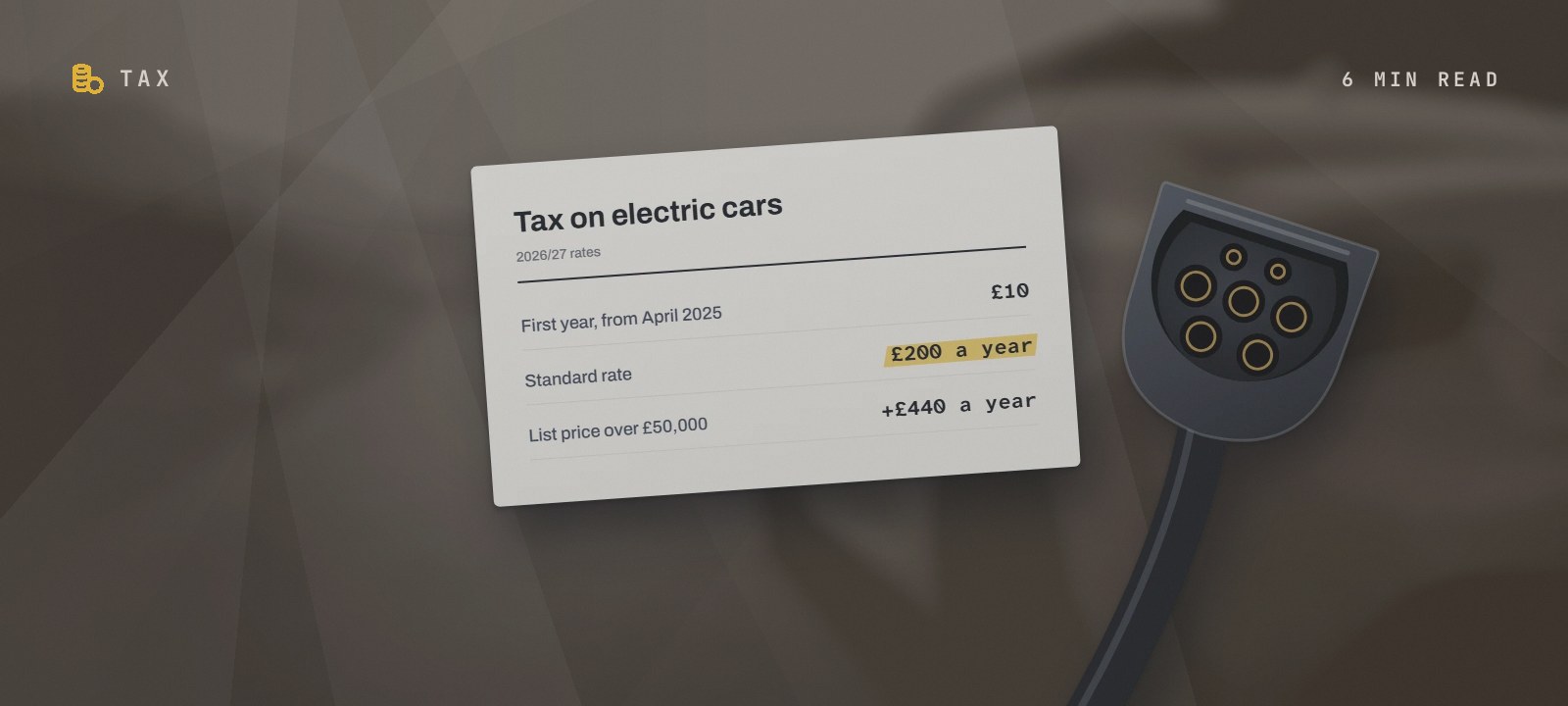
For the 2026/27 tax year, from 1 April 2026, a brand new EV pays £10 for its first year. From the second licence onwards it pays the same standard rate as a petrol or diesel car, £200 a year, or £210 spread over 12 monthly Direct Debits.
If its list price when new was over £50,000, it also pays the £440 expensive car supplement for five years, which makes £640 a year in all. The rates are revised each April, and our car tax calculator carries the current figures for all three regimes, with the breakdown line by line.
What is the expensive car supplement?
An extra annual charge on any car with a list price above a set threshold, payable in years two to six. It is the part that catches EV buyers, because electric cars cost more to build and a fairly ordinary family EV can sit above the line while its petrol equivalent sits under it.
Two details are worth knowing. It is the list price that counts, including options fitted at the factory, not what anybody actually paid after a discount. And zero-emission cars have their own higher threshold, £50,000 against £40,000 for every other car, which softens the effect a little.
Does an older electric car pay the supplement?
No. GOV.UK confirms that zero-emission cars registered before 1 April 2025 are exempt from the supplement, whatever they cost new. They do pay ordinary road tax now, at the rate for their age.
| Electric car | What it pays |
|---|---|
| Registered 1 March 2001 to 31 March 2017 | Band A, the lowest CO₂ band: £20 a year |
| Registered 1 April 2017 to 31 March 2025 | Standard rate, £200 a year, and no supplement |
| Registered from 1 April 2025 | First-year rate, then standard rate, plus the supplement if the list price was over the threshold |
That makes an expensive used EV registered in, say, 2023 quietly cheaper to tax than the same car registered in 2026: the older one never pays the supplement, while the newer one pays it in years two to six. It is worth factoring in when you compare two otherwise similar cars.
What is the pay-per-mile charge planned for 2028?
The next change is already announced: from April 2028 the government plans a per-mile addition to road tax for electric cars, set out in HMRC's eVED policy paper at 3p a mile for fully electric cars and 1.5p for plug-in hybrids, paid alongside the standard rate.
Drivers would estimate their mileage when they tax the car and settle up at the end of the year, with MOT odometer readings used to check the figures. At the average of about 7,100 miles a year, 3p a mile comes to about £213. It applies to cars rather than vans, and the detail could still shift before 2028, so treat it as a budgeting line rather than a bill.
Do electric cars still need an MOT and insurance?
Yes to both, on exactly the same terms as any other car. The first MOT falls due at three years old, the test covers the same safety items minus the emissions check, and the car must be insured continuously unless it is declared off the road.
Nothing about the powertrain changes any of that. Our free MOT check works on electric cars just as it does on petrol and diesel.
What else costs money on an electric car?
Tax is only one line. Electricity at home is much cheaper per mile than petrol, while public rapid charging can cost several times the home rate and narrows the gap sharply. Insurance tends to run a little higher, tyres wear faster on a heavier car, and servicing is usually cheaper because there is less to service.
Depreciation is the number that moves most, and electric residuals have been the volatile part of the used market. Our running cost calculator puts all of it together for a given mileage, and the used electric car guide covers what to check on the car itself. If you are weighing an EV against the alternatives, our running cost comparison is the place to start.