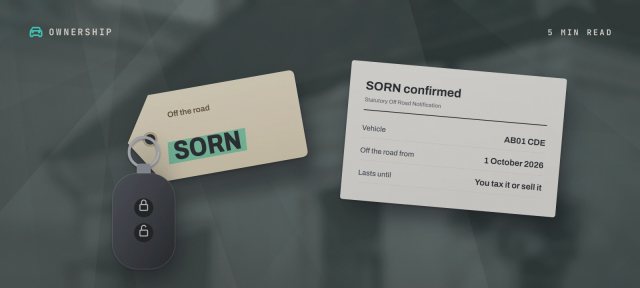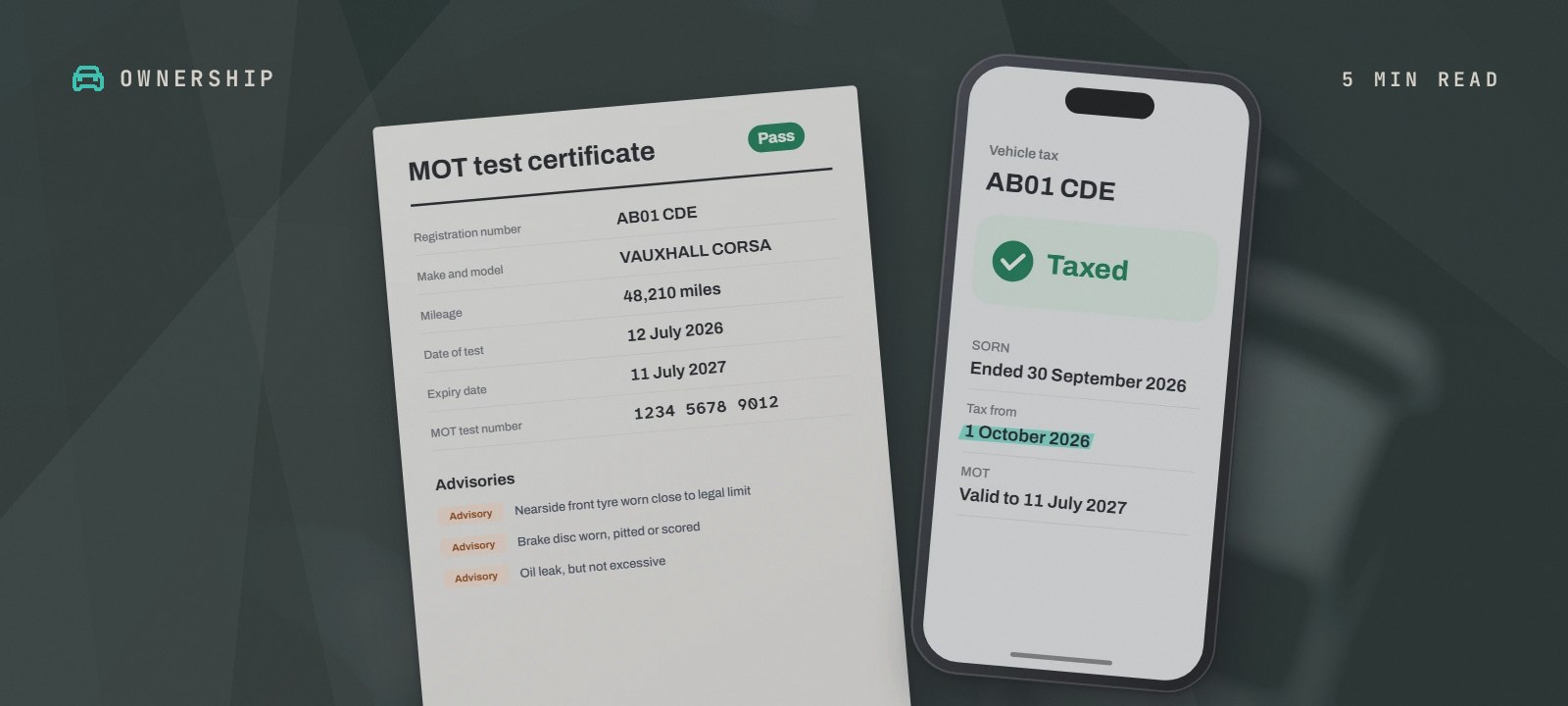
You take a car off SORN by taxing it. There's no separate form to cancel a SORN. The moment DVLA records the tax, the SORN ends and the car can go back on the road, provided it has a valid MOT and insurance.
Can you cancel a SORN?
Not directly. Taxing the car is the only way to remove a SORN yourself, and it does so automatically.
DVLA puts it plainly in its SORN myth-buster: "There is no such thing as 'unSORNing'." You don't phone DVLA, fill in a cancellation form or wait for a letter. Selling, scrapping or permanently exporting the car also ends a SORN, but none of those puts it back on the road.
What do you need before you tax a car that's been SORN?
- A valid MOT, if the car needs one. It must be valid on the day the tax starts. Cars under three years old in Great Britain are exempt, and so are cars over 40 years old that haven't been substantially changed.
- Insurance in place before the car goes on a public road, including the drive to an MOT.
- A reference number. Use the 11-digit number from a V5C logbook in your name, the 16-digit reference on a DVLA tax reminder, or the 12-digit reference on the green new keeper slip if you've just bought the car.
- A way to pay. Pay by debit or credit card, or set up a Direct Debit online or at a Post Office. You can't set one up by phone.
How do you take a car off SORN, step by step?
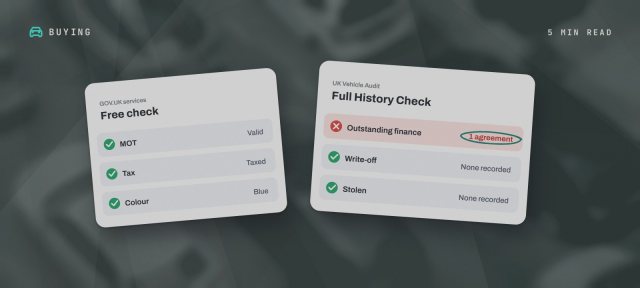
- Check the MOT with our free MOT check to see whether it is still valid.
- If the MOT has run out, book a test and insure the car for the drive there.
- Give a new MOT up to two days to reach DVLA's records.
- Tax the car on GOV.UK, by phone or at a Post Office that handles vehicle tax.
- Drive once the tax is confirmed and the car is insured: the SORN has now ended.
Can you drive a SORN car to an MOT?
Yes, to a pre-booked MOT or other test, and back again. GOV.UK says that trip is the only time a SORN car can use a public road.
The car still has to be insured for the journey. If it fails with a dangerous defect, it can't be driven away until that's repaired, so a car that has been standing for a long time is worth a look before you set off.
Why can't you tax a car straight after its MOT?
A new MOT can take up to two days to reach DVLA. GOV.UK warns that you might not be able to tax a vehicle immediately after it passes its test.
If the tax service says there's no valid MOT, wait a day and try again. The drive home from the test is covered by the SORN exception, but nothing after that is.
What if you've just bought a car that was SORN?
A SORN doesn't pass to a new keeper, so you tax the car yourself before you drive it. Use the 12-digit reference on the green new keeper slip the seller gives you.
The same MOT rule applies, and the seller's tax never transfers either. Our guide to taxing a car you've just bought covers that route in full.
Does it cost anything to take a car off SORN?
No. Ending a SORN is free, and you pay only the normal vehicle tax for the car.
How much that is depends on when the car was first registered: engine size before March 2001, CO₂ emissions from March 2001 to March 2017, and a flat standard rate after that, with a supplement on cars that had a high list price. The car tax calculator works it out, and our guide to what a SORN is and how long it lasts covers the rest of the rules.