Quick answer: hire purchase (HP) if you want to own the car at the end, personal contract purchase (PCP) if you want lower monthly payments and a choice at the end, and leasing, or personal contract hire (PCH), if you want a new car as a flat monthly bill.
We sell history checks, not finance, so no answer here earns us a commission.
What's the actual difference between HP, PCP and leasing?
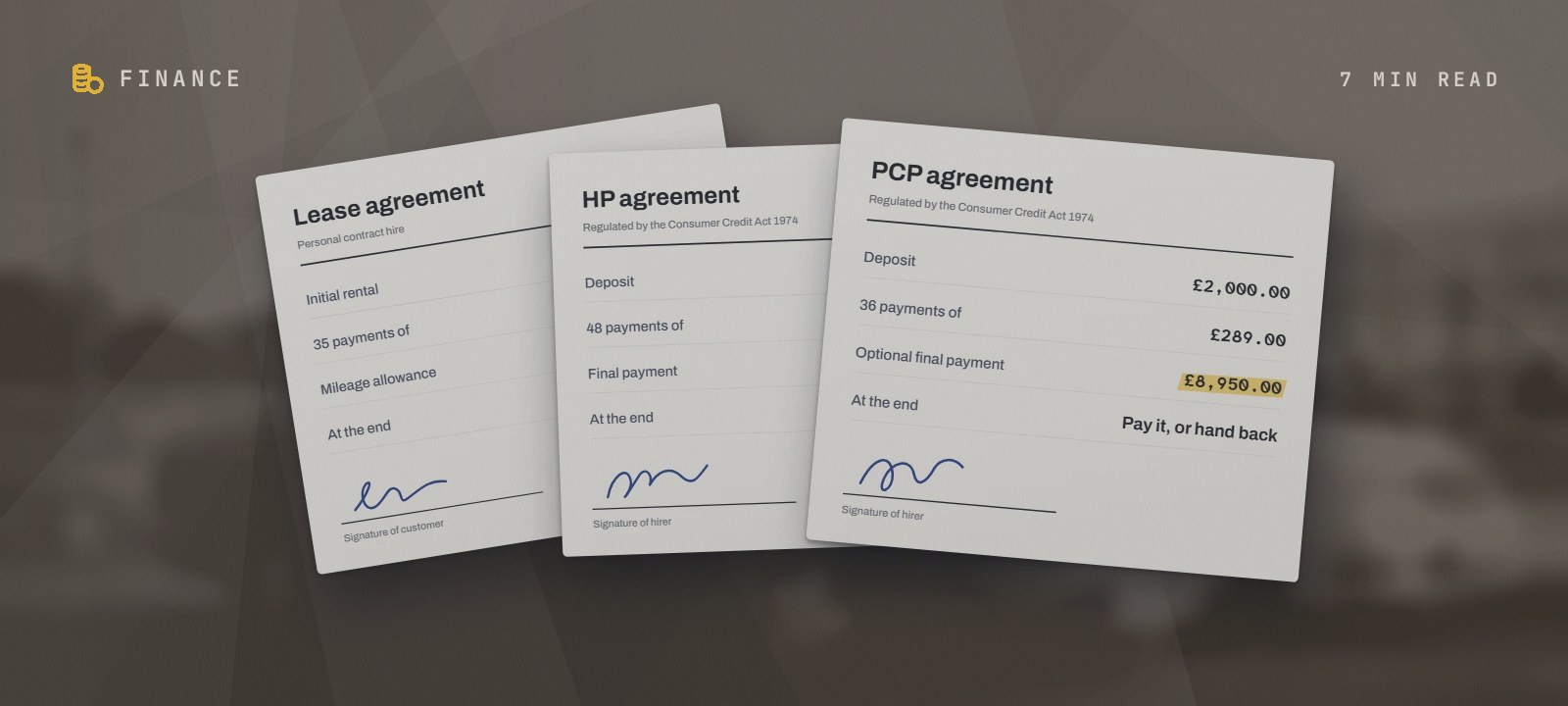
HP is a loan you pay off in full, PCP is a loan with a big chunk deferred to the end, and leasing is a rental. On HP you borrow the whole price, pay interest on all of it, and own the car after the final payment.
On PCP you mostly finance the depreciation; the rest is parked in a balloon payment, the guaranteed minimum future value (GMFV), which you pay, refinance or walk away from.
On PCH you hand the car back, full stop, and the monthly figure normally includes road tax for the whole contract (vehicle excise duty at the standard £200 rate, per DVLA's rate tables).
| HP | PCP | Leasing (PCH) | |
|---|---|---|---|
| Own it at the end? | ✓ automatically | Only by paying the balloon | ✗ never |
| Deposit | Around 10% | Flexible, can be small | Several months' rental upfront |
| Monthly cost | Highest | Middling | Lowest, for a new car |
| Mileage limits | ✓ none | ✗ capped | ✗ capped, strictly |
| Early exit | Hand back once half paid | Same, but "half" arrives late | Painful: contract terms only |
| Best for | Keeping the car | Changing car every 3–4 years | Fixed-cost motoring |
Is PCP cheaper than HP?
Per month, yes; overall, no. That's the whole trick. Take a £15,000 used car over four years with £1,500 down at 9.9% APR, a typical advertised used-car rate. On HP you'd pay roughly £340 a month and about £2,800 in interest, and the car is yours.
On PCP with a £6,000 balloon it's around £240 a month, but nearly £4,000 in interest if you keep the car, because the balloon accrues interest for the full term. The £100 a month PCP "saves" costs you £1,000-odd extra to end up in the same place.
Run your own figures through our car finance calculator before the dealer's desk does.
What are the traps with each one?
Mileage caps and negative equity do most of the damage. A PCP's balloon assumes a mileage and condition: beat the cap or kerb the alloys and the hand-back gets expensive. Worse is negative equity: owing more than the car is worth mid-agreement, which quietly rolls into the next deal at trade-in.
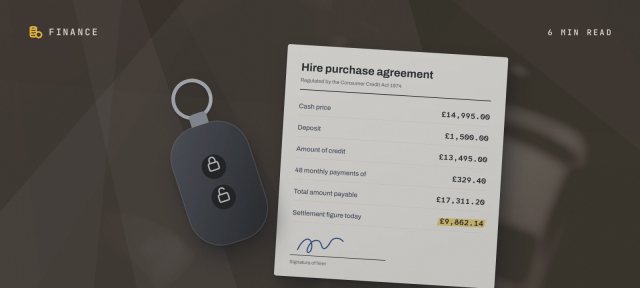
Get the settlement figure from your lender before part-exchanging a car with finance still owing. Leases bite through excess-mileage charges, set in pence per mile, commonly 3p to 30p. Sounds like nothing, until you hand back 5,000 miles over at 10p a mile and get a £500 invoice.
Can you get out of car finance early?
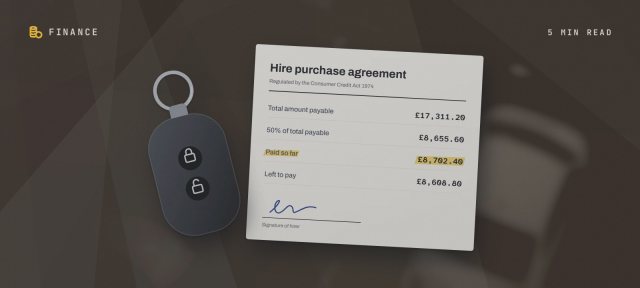
HP and PCP, yes, by law. Under sections 99 and 100 of the Consumer Credit Act 1974 you can hand the car back and walk away once you've paid half the total amount payable. On HP that arrives around mid-term. On PCP the balloon counts towards the total, so "half" lands cruelly late, often in the final year.
Leasing has no equivalent right: ending a PCH early costs whatever the contract says, typically a large slice of the remaining rentals.
Who is each one actually for?
HP suits the keeper: no mileage anxiety and the car is yours, in exchange for higher monthlies. PCP suits someone driving a newer car than their budget strictly allows, who'll change it in three or four years anyway. Leasing suits motoring-as-subscription: one fixed number, tax included, handed back before anything expensive wears out.
If your credit is decent, price up a plain personal loan too: you own the car from day one and it often undercuts dealer APRs.
What should you check before signing?
The APR first: it's negotiable, and quotes vary widely between dealer, bank and online lenders. The Financial Conduct Authority (FCA) banned discretionary commission (brokers bumping your rate to bump their own cut) from 28 January 2021, but shopping around still gets you the better rate.
At the time of writing the FCA is also running a redress scheme for historic commission on agreements taken out between 2007 and late 2024; if that might be you, check the FCA's own guidance rather than paying a claims firm to do it.
Then check the car itself: finance doesn't make a bad car good. Finally, the debt follows the car, not the driver: read what an outstanding finance check tells you before buying used, because a previous keeper's unpaid PCP can cost you the whole car.