Checking a car for outstanding recalls takes about thirty seconds and costs nothing: put the registration into the Driver and Vehicle Standards Agency (DVSA) recall checker at gov.uk/check-vehicle-recall.
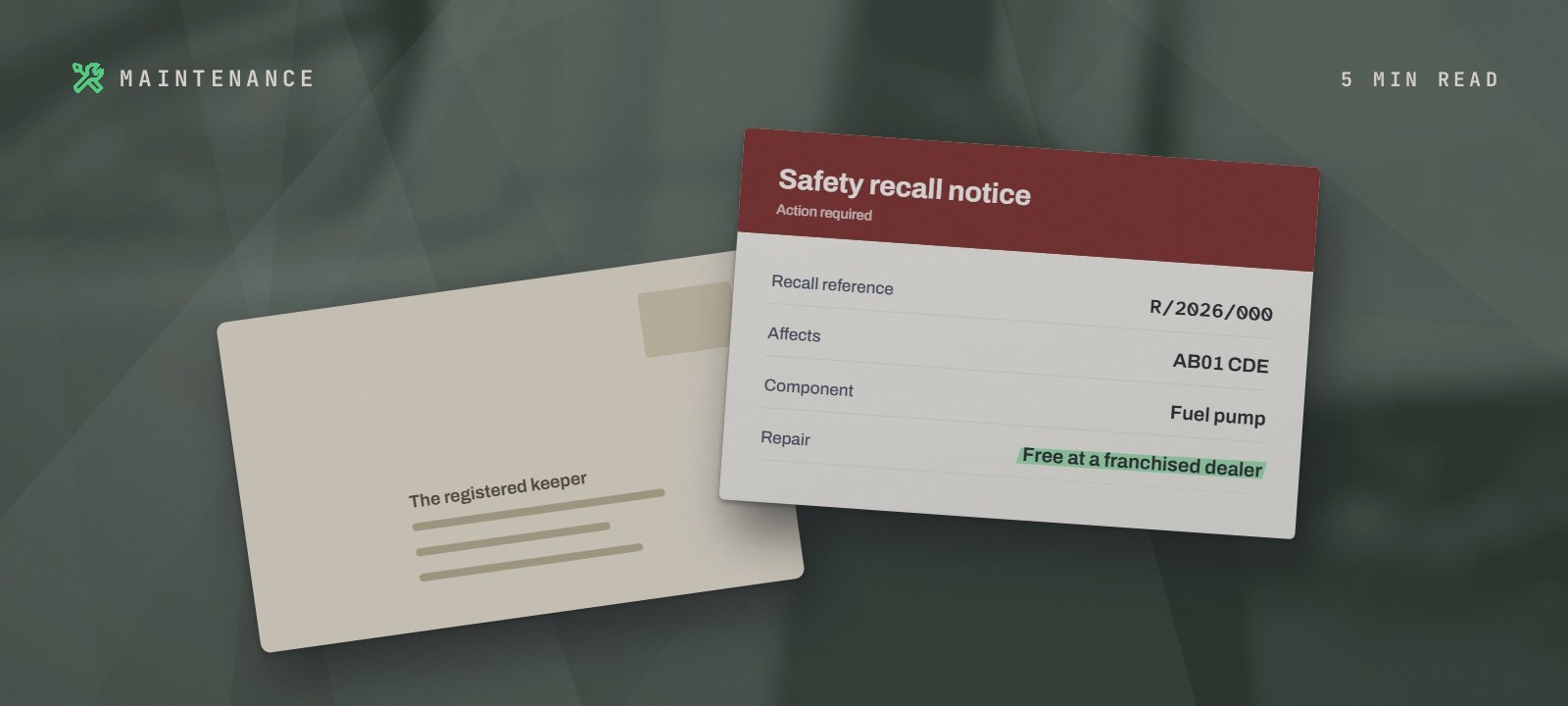
If a safety recall is showing, the repair is free at a franchised dealer, however old the car, however many owners it's had. Check before you view a used car, because the recall letter goes to the registered keeper. That isn't you yet.
How do I check a car for outstanding recalls?
Use DVSA's free online checker (no account, no fee and, for cars, no VIN needed):
- Go to "Check if a vehicle, part or accessory has been recalled" on gov.uk.
- Pick "car" and enter the registration.
- Read the result: any outstanding safety recall is listed, with what the defect is and what to do next.
- For a belt-and-braces answer, phone a franchised dealer for the make with the VIN (base of the windscreen, driver's door pillar, on the V5C logbook); they query the manufacturer's own database, the master copy.
The same service covers motorcycles, lorries, caravans and parts (child seats and tyres included). One honest caveat: the reg check relies on manufacturers sharing their recall data with DVSA, and not all of them share everything. A clear result is a good sign, not a guarantee; the phone call settles it.
Are recall repairs really free on an old car?
Yes: entirely, and with no time limit. DVSA's guide to safety recalls in the used vehicle industry puts it plainly: "A safety recall is undertaken by the manufacturer free of charge." The obligation doesn't lapse when the car changes keeper or turns ten; an unfixed recall simply stays on the vehicle's record until the work is done.
Third owner of a twelve-year-old car? Ring any franchised dealer for the marque with the reg and VIN and they'll book it in. Parts and labour cost you nothing; the price is a morning without the car.
Why check recalls before buying a used car?
Because nobody is going to tell you. Recall letters go to the registered keeper at the address on the V5C, and for a car you're still only thinking about, that's the seller. You'll never get the manufacturer's letter for a car you haven't bought yet, so the thirty-second check before you travel is the only warning you get.
An ignored recall also tells you about the seller. The fix was free and they still didn't bother, so what happened to the maintenance that cost money? It's the same character test you're running when you go through the service history.
Traders get less benefit of the doubt: DVSA's guidance to the used-vehicle trade is that a car should not be passed to a consumer with a safety recall outstanding. A private seller has no such duty, which is exactly why you check.
What counts as a recall, and what doesn't?
A safety recall is reserved for defects that make a car dangerous. DVSA's code of practice on vehicle safety defects and recalls defines it as a design or construction failure likely to affect safe operation and put the driver, occupants or others at significant risk: airbags, brakes, steering, fire.
Below that sit service campaigns and technical service bulletins (TSBs): manufacturers' fixes for known niggles (a rattle, a software glitch, a thirsty engine) that aren't safety-critical. Those don't appear on the recall checker, aren't compulsory and aren't automatically free; dealers often do them quietly as goodwill during a paid service.
So "no outstanding recalls" means exactly that, not "no known faults".
What if the car I want has an outstanding recall?
Ask the seller to get it fixed before you buy; it costs them nothing but a phone call, and their reaction is information in itself. A trader should have had it done before the car ever went up for sale. The one hard line is a stop-drive recall: if the checker or the dealer says the car mustn't be driven until it's repaired, that includes your test drive.
Then finish the homework while you're at it. Run the reg through our free MOT and mileage check (reading the MOT history properly tells you how the car was cared for between recalls), then work through the rest of the used car buying checklist before you travel.
Two minutes of typing filters out most of the cars that would have wasted your Saturday.